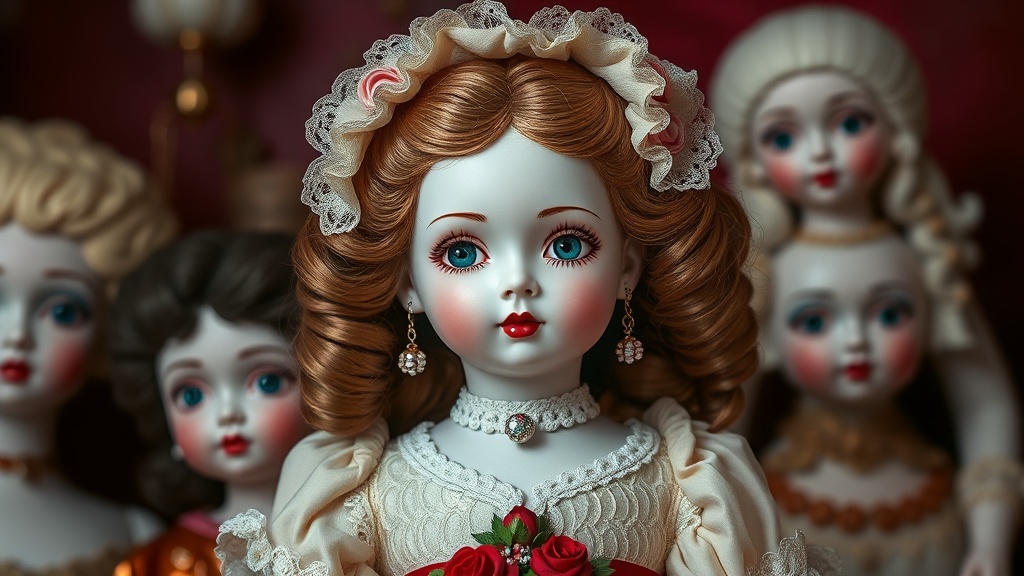
10 Most Valuable Porcelain Dolls Every Collector Dreams of Owning

Bru Jne R Bebe Dolls (1860s-1880s)
Jumeau Portrait Bisque Bebes
Huret Poupees Fashion Dolls
Kestner JDK Character Babies
Simon & Halbig Lady Dolls
Gaultier Block Letter Bebes
Steiner Figure A Mechanical Dolls
French Fashion Poupees by Rohmer
Limited Edition Wendy Dickison Dolls
Rare Reproduction Dolls by Hillary Rounds
Some porcelain dolls sit quietly on shelves for decades. Others command five and six-figure prices at auction houses like Christie's and Sotheby's. This post breaks down ten of the most valuable porcelain dolls ever produced — pieces that serious collectors chase at estate sales, conventions, and private sales worldwide. Whether you're hunting for investment-grade pieces or simply want to understand what drives value in this niche, these dolls represent the absolute pinnacle of the collectible market.
What Makes a Porcelain Doll Valuable?
The value of a porcelain doll isn't arbitrary. Several factors work together to determine worth — condition, rarity, provenance, and the reputation of the artist or manufacturer.
Mint condition matters enormously. A doll with original clothing, intact fingers, and unclouded eyes will always outperform a damaged counterpart — even if that counterpart is decades older. Factory-original paint, unglued wigs, and working sleep eyes (the weighted eyes that close when laid down) are non-negotiable for top-tier pricing.
Provenance plays a massive role. A doll that belonged to a historical figure — or one with documented ownership stretching back to its manufacture — carries premium weight. Documentation beats storytelling every single time.
Artist reputation drives modern pieces. Dolls by Dianna Effner, Wendy Dickison, and Hildegard Gunzel regularly outperform anonymous factory production. Limited editions — especially those numbered under 100 — create scarcity that the market rewards.
Which Porcelain Doll Manufacturers Are Most Collectible?
The manufacturers that dominate the high-end market share common traits: German and French origins, 19th-century founding dates, and uncompromising craftsmanship standards.
Jumeau — Founded in Paris in the 1840s, Jumeau produced some of the finest bisque dolls ever made. The company's Bébé series — particularly the Portrait and Triste models — represent the apex of French doll-making. Original Jumeau dolls with signed bodies and original costumes routinely sell between $5,000 and $50,000.
Kämmer & Reinhardt — This German manufacturer operated from 1886 to 1932 and created character dolls that broke from the idealized "dolly face" standard. Their character babies — molded with realistic expressions, detailed hands, and proportionate bodies — changed the industry. The rare 114 Hans model has sold for over $250,000 at auction.
Simon & Halbig — Another German powerhouse, Simon & Halbig supplied heads to numerous French and German body manufacturers. Their 1079 and 1249 models appear on the finest French bodies, creating hybrid pieces that collectors prize. A Simon & Halbig 1079 on an original French body can command $8,000–$15,000.
Steiner — Jules Steiner founded his Paris workshop in 1858. The company's Bébé Gigoteur (jumping jack) mechanism and mechanical walking dolls were engineering marvels. Steiner's Figure A and Bébé Premier models represent serious investment-grade pieces.
Are Antique Porcelain Dolls Better Investments Than Modern Artist Dolls?
Not necessarily — though the markets behave very differently. Antique dolls (pre-1930) benefit from scarcity and historical significance. Modern artist dolls benefit from living creators who can authenticate their work and control production numbers.
Antique pieces carry condition risks. Bisque can develop hairlines. Composition bodies crack and warp. Restored antique dolls — while beautiful — typically sell for 30–60% less than their mint counterparts. The market punishes even expert restoration.
Modern artist dolls offer different advantages. You'll find them at UFDC conventions (United Federation of Doll Clubs) and through artist-direct sales. Limited editions of 25 or fewer pieces create immediate scarcity. The risk? Artists can produce similar work later, diluting value. Or they can stop working entirely — sometimes increasing scarcity, sometimes eliminating the market entirely.
Here's the thing: serious collectors often build portfolios containing both. Antiques anchor a collection historically. Modern pieces support living artists and offer pieces that won't require the delicate handling of 150-year-old bisque.
The 10 Most Valuable Porcelain Dolls
1. Kämmer & Reinhardt 114 Hans
The holy grail of character dolls. Created in 1909 by sculptor Carl Krausser, the 114 Hans depicts a realistic boy with side-glancing eyes, a determined expression, and detailed molded hair. Only a handful survive in mint condition.
The last documented sale — a pristine example with original costume — cleared $280,000 at Theriault's auction. Most collectors will never touch one. But understanding why this doll matters helps evaluate every other character baby on the market.
2. Jumeau Bébé Triste
Emile Jumeau introduced the Triste (sad face) in the 1880s. The model broke convention — most French dolls smiled sweetly. The Triste's wistful expression, paperweight eyes, and luxurious couture wardrobe created an immediate sensation.
Original Triste dolls with documented provenance sell for $20,000–$60,000. The size matters enormously — larger examples (28+ inches) command significant premiums over smaller versions.
3. Bru Bébé Gourmand
The Bru firm operated from 1866 to 1899 and produced some of the most mechanically sophisticated dolls ever made. The Bébé Gourmand features a mechanism allowing the doll to "eat" and expel food — a Victorian marvel that still functions in well-preserved examples.
Working Gourmand dolls with original mechanism boxes trade privately for $40,000–$80,000. Non-working examples or those with replaced bodies still fetch $15,000+. The mechanical complexity creates inherent scarcity — few survived intact.
4. Kestner 264 Character Baby
J.D. Kestner's 264 model — produced in the early 1900s — represents German character doll-making at its finest. The model features a closed mouth, detailed baby hands with separate fingers, and a realistic body proportion.
Mint examples with original bodies and clothing sell for $8,000–$18,000. The catch? Many 264 heads were placed on replacement bodies. Original Kestner bodies command 40% premiums over even high-quality replacements.
5. Jumeau Portrait Bébé
In the 1880s, Jumeau began producing portrait dolls modeled after real children — often royal offspring or celebrity offspring of the era. These weren't generic "dolly faces." They captured specific features: widow's peaks, distinctive noses, particular eye shapes.
Identified portrait dolls (those with documented subjects) sell for $30,000–$100,000+. Unidentified portrait dolls — while still valuable — trade in the $8,000–$20,000 range.
6. Steiner Bébé Gigoteur
The jumping jack mechanism in Steiner's Gigoteur dolls was revolutionary. When suspended by a cord, these dolls move limbs in realistic baby-like motions. The mechanism required extraordinary precision — and extraordinary maintenance over 140+ years.
Working Gigoteurs with original bodies and costumes command $15,000–$35,000. Non-working examples or those with replaced mechanisms still hold value ($5,000–$12,000) but lack the premium of functional pieces.
7. Simon & Halbig 1079
The 1079 represents Simon & Halbig's finest child doll sculpt. Large, expressive eyes. Delicate facial modeling. A body proportion that avoided the "adult head on baby body" look common to lesser dolls.
The 1079 appears on various French bodies — Jumeau, Steiner, and others. Original pairings with documented factory records sell for $10,000–$25,000. The head alone (worth perhaps $2,000–$4,000) tells only part of the story — proper body attribution transforms value.
8. Kämmer & Reinhardt 101 Marie
The 101 Marie — introduced alongside the more famous 114 Hans — depicts a thoughtful girl with distinctive side-glancing eyes. While less rare than Hans, the Marie appears more frequently on the market — and in better condition.
Mint Maries with original bodies and costumes trade for $12,000–$25,000. The model's relative availability makes it a more realistic target for serious collectors who can't pursue the stratospheric Hans pricing.
9. Bru Bébé Breveté
Bru's "Breveté" (patented) dolls introduced innovations in eye mechanisms and body construction. The pressed bisque heads — lighter than poured bisque — allowed larger sizes without excessive weight.
Large Breveté dolls (26+ inches) with original wardrobes and accessories sell for $15,000–$40,000. Smaller examples trade at proportionally lower prices. The pressed bisque creates a distinctive matte finish that experts recognize immediately.
10. Modern: Dianna Effner's "The Portrait Collection"
No list of valuable porcelain dolls is complete without acknowledging modern artistry. Dianna Effner — working from the 1970s until her death in 2022 — created porcelain dolls that bridged fine art and collectibility.
Her Portrait Collection pieces — limited to 25 or fewer worldwide — featured custom painting, hand-rooted hair, and original costuming by Effner herself. These pieces sold originally for $2,000–$5,000. Secondary market prices now reach $8,000–$20,000 for the most sought-after models.
Worth noting: Effner's death in 2022 created immediate scarcity. No new pieces will enter the market. Her influence on modern doll-making — particularly the "Dollfie" and Asian ball-jointed doll movements — extends far beyond her own production.
Value Comparison: What Drives Price Differences?
| Doll/Model | Mint Condition Range | Restored Condition Range | Key Value Driver |
|---|---|---|---|
| K&R 114 Hans | $200,000–$300,000 | $50,000–$100,000 | Extreme rarity, historical significance |
| Jumeau Triste | $20,000–$60,000 | $8,000–$25,000 | Documented provenance, size |
| Bru Gourmand (working) | $40,000–$80,000 | $15,000–$30,000 | Functioning mechanism, original box |
| Kestner 264 | $8,000–$18,000 | $3,000–$8,000 | Original body attribution |
| Dianna Effner Portrait | $8,000–$20,000 | $4,000–$10,000 | Artist death, limited edition size |
The pattern is clear: condition multiplies value more than age alone. A damaged 150-year-old Jumeau might sell for less than a mint 30-year-old Effner. Documentation matters more than storytelling. And original factory clothing — often more fragile than the dolls themselves — can represent 30–40% of total value.
Where Do Collectors Actually Find These Dolls?
You won't stumble across a K&R 114 Hans at a suburban garage sale. (If you do, buy a lottery ticket immediately.) Serious collectors source investment-grade dolls through specific channels.
Auction houses: Theriault's specializes in antique dolls and holds multiple dedicated auctions annually. Bonhams and Christie's handle the absolute top tier — pieces with royal provenance or museum exhibition history.
UFDC conventions: The United Federation of Doll Clubs hosts annual conventions where dealers, collectors, and artists converge. These events offer education, authentication services, and private sales between serious collectors.
Private networks: The most valuable pieces often trade privately — never appearing in public auction records. Building relationships with established dealers, museum curators, and serious collectors creates access to these off-market opportunities.
Dealer specialists: Dolls of comparable quality to those listed here appear regularly through dealers like Theriault's, Dolls Lane, and Fritch Dolls. These specialists authenticate, restore (when appropriate), and document provenance — adding value through expertise.
That said, the thrill of the hunt keeps many collectors in the game. Estate sales in wealthy neighborhoods — particularly those handling generational collections — occasionally surface unexpected treasures. The key is knowing what you're looking at. A Simon & Halbig 1079 misidentified as "some old doll" at an estate sale represents the opportunity that built many significant collections.
The market for valuable porcelain dolls remains surprisingly robust despite demographic shifts. Younger collectors are entering through modern artist dolls and rebodying antique heads onto poseable bodies. The pieces listed here — whether 140 years old or 40 — represent tangible connections to craftsmanship standards that mass production simply cannot replicate.