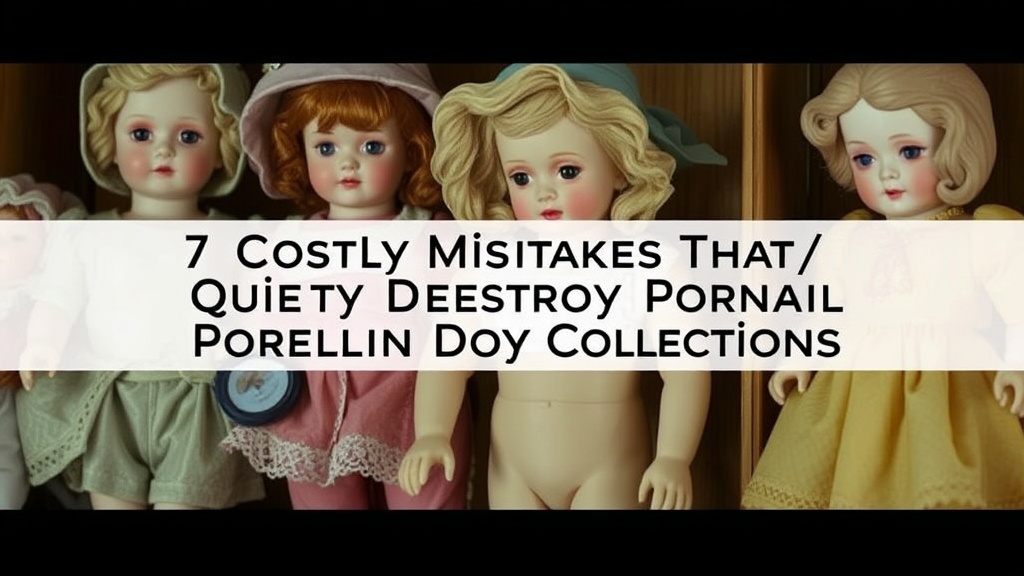
7 Costly Mistakes That Quietly Destroy Porcelain Doll Collections

This post covers the most common errors collectors make—and the simple fixes that'll keep your porcelain dolls pristine for decades. You'll learn what actually damages bisque, how to spot problems before they spread, and which "helpful" habits are secretly hurting your collection.
Why Is Direct Sunlight So Damaging to Porcelain Dolls?
That sunny display case looks charming—until you notice the fading. Direct sunlight doesn't just dull paint; it breaks down the chemical bonds in antique pigments and can make composition bodies brittle. UV rays penetrate glass and wreak havoc on faces, clothing, and even the porcelain itself.
The damage isn't always immediate. Some collectors notice yellowing or chalking years after exposure began. By then, the deterioration is usually irreversible. Antique dolls with original paint are especially vulnerable—their pigments weren't formulated with modern lightfastness standards.
What to do instead: Position displays away from windows, or invest in UV-filtering film for glass cases. North-facing rooms work best for permanent displays. If you rotate pieces seasonally, keep your most valuable dolls in darker storage when not on view. Museums follow the same principle—rotation and controlled light exposure.
Light meters aren't just for photography nerds. You can pick up an inexpensive one online and test your display areas. Anything above 150 lux sustained exposure starts the clock on gradual damage. For reference, a bright office runs around 500 lux.
Are You Cleaning Your Dolls Too Often?
There's a difference between dusting and cleaning—and most collectors cross that line too frequently. Every time you handle a porcelain doll, you risk dropping it, stressing the composition body, or transferring oils from your skin. The cleaning products themselves often cause more harm than the dirt they're removing.
Ammonia-based glass cleaners? They'll cloud porcelain over time. Baby wipes? The moisture seeps into cracks you can't see and builds mold. Even distilled water can leave mineral deposits if not dried properly. The less you intervene, the longer your dolls last.
Here's the rule: dust only when necessary, clean only when visibly dirty, and restore only when absolutely required. A soft makeup brush (natural bristle, reserved exclusively for dolls) handles 90% of maintenance needs. For stubborn grime, slightly dampened cotton swabs work on small areas—but never saturate the bisque.
Hair requires special caution. Mohair and human hair wigs weren't made to withstand modern cleaning agents. If the hairstyle is original, leave it alone. Disturbing a century-old arrangement destroys historical value along with the aesthetic.
What's the Right Humidity Level for Porcelain Doll Storage?
Porcelain itself doesn't care about humidity—but the materials attached to it absolutely do. Wood composition bodies swell and crack in high humidity. Leather shoes stiffen and split in dry air. Fabric clothing fades, weakens, or attracts pests depending on moisture levels.
The sweet spot sits between 45% and 55% relative humidity. Below 40% and you're risking desiccation damage. Above 60% and mold becomes a genuine threat. Basements and attics are almost always wrong for long-term storage—too damp or too dry, rarely stable.
Practical solutions: Silica gel packets help in enclosed cases, but they need monitoring and replacement. Small humidifiers or dehumidifiers work for dedicated doll rooms. Hygrometers cost under $10 and should live in every storage area. Check them monthly—seasonal swings catch collectors off guard.
Never store dolls in plastic bags or sealed containers without moisture control. That "protective" ziplock becomes a greenhouse for mildew faster than you'd think. Acid-free tissue and breathable storage boxes allow air circulation while keeping dust out.
Are Display Stands Actually Hurting Your Dolls?
Those metal display stands that came with modern collector dolls? Often more trouble than they're worth. Metal against bisque creates pressure points. Rubber components degrade and stick to porcelain. The wrong stand forces dolls into unnatural poses that stress joints and clothing.
Antique dolls present different challenges. Their leather bodies weren't designed to support their own weight indefinitely. Standing them for display accelerates deterioration of the internal armature. Many Victorian dolls originally came with seated display cases for exactly this reason.
Custom stands exist for a reason—but even good ones need checking. Felt pads compress and harden. Velcro adhesive fails. The doll slowly shifts, creating new pressure points you don't notice until damage appears.
Rotate how your dolls are positioned. If one's been standing for six months, give it a rest in a seated display or acid-free storage. Vary the contact points. And never, ever suspend a doll by its head or limbs—that's a restoration bill waiting to happen.
Why Does Repainting Destroy a Doll's Value?
The temptation is real. A faded cheek, a chipped finger, worn eyebrows—you could fix those, right? Maybe. But unless you're a trained professional, you're probably destroying more value than you're preserving.
Original paint is documentation. It connects the doll to its maker, its era, its path through history. Repainted dolls lose their authenticity and most of their collector value. Even skilled repainting rarely matches original techniques and materials. Modern acrylics look different under UV light. New paint sits on the surface differently.
Worse, amateur repairs often use materials that damage the original bisque. Super glue yellows. Nail polish remover dissolves antique finishes. House paint contains chemicals that interact unpredictably with century-old pigments.
If damage bothers you aesthetically, consider displaying the damaged doll separately or photographing it and storing the original safely. Replacement dolls in better condition cost less than professional restoration in many cases. When restoration is genuinely needed—for sentimental pieces or rare specimens—consult the National Association of Memorabilia and Antique Doll Technicians to find qualified specialists.
How Should You Handle Pet and Pest Risks?
Cats don't see heirlooms—they see toys at eye level. Dogs knock things with tails you swear they control intentionally. Even well-trained pets create dust, dander, and the occasional catastrophe. But pets are obvious risks. Pests are sneakier.
Clothes moths adore antique wool and silk. Silverfish munch on hair and paper tags. Rodents collect nesting material from doll clothing. And every region has its particular threats—carpet beetles in some areas, woodworms in others.
Prevention beats reaction. Cedar blocks help (though they need refreshing). Mothballs work but smell terrible and may affect materials. The best protection is inspection. Check stored dolls quarterly. Look for frass (insect droppings), webbing, hair loss, or tiny holes in fabric.
Never use insecticide sprays near dolls. The chemicals settle on bisque and can't be fully removed. If you discover an infestation, isolate affected pieces immediately and consult a professional conservator. The American Institute for Conservation maintains directories of specialists who understand antique materials.
Are You Insuring Your Collection Properly?
Homeowner's insurance typically caps collectibles coverage at $1,000—sometimes less. A single antique Bru Jeune or Jumeau can exceed that. Most collectors are dramatically underinsured without realizing it.
Documentation matters for claims. Photograph every doll from multiple angles. Record maker marks, measurements, condition notes, and provenance. Keep purchase receipts and appraisal documents. Store this information offsite or in cloud storage—alongside your physical collection is useless if disaster strikes.
Specialized collectibles insurance exists and isn't prohibitively expensive. It covers risks standard policies exclude—mysterious disappearance, gradual deterioration from environmental factors, damage during transit. Some policies even cover restoration costs after covered damage.
Appraisals should happen every 3-5 years. Markets shift. Values that seemed inflated in 2010 look reasonable now. Conversely, reproductions and mass-market dolls often decline. Your insurance should reflect current replacement value, not purchase price or sentimental attachment.
Store the collector's paradox: the more you love something, the more carefully you should handle it—and the less you should handle it at all. Great collections survive because their owners understood that preservation sometimes means leaving things alone.