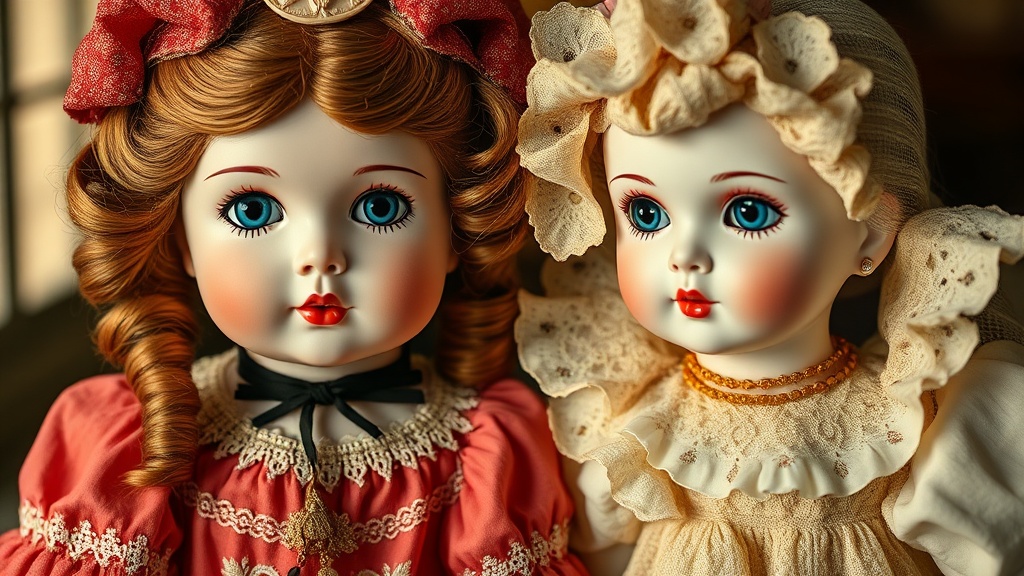
Identifying Authentic Porcelain Dolls and Spotting Modern Reproductions

Did you know that a single genuine 19th-century bisque doll can be worth more than a mid-sized sedan?
The world of antique doll collecting is often a minefield of high-quality reproductions and clever-looking fakes. If you don't know what to look for, you might end up spending hundreds—or even thousands—of dollars on a piece that was actually manufactured just five years ago. This post covers the specific visual cues, material markers, and structural details that separate a true vintage heirloom from a modern imitation. Knowing these distinctions isn't just about saving money; it's about respecting the history of the craft.
Identifying an authentic piece requires a keen eye and a bit of patience. It isn't always obvious, especially when manufacturers create "vintage-style" dolls for the gift market. You'll need to look past the surface-level charm and examine the weight, the texture, and the way the light hits the porcelain. We'll break down the most common areas where collectors get tripped up.
What are the hallmarks of real bisque porcelain?
True bisque is unglazed porcelain that has been fired to a matte, skin-like finish. It's incredibly delicate. One of the first things you should notice is the way the material handles light. Authentic vintage bisque often has a soft, translucent quality. If the surface looks too shiny or almost plastic-like, it's a red flag. Many modern imitations use high-gloss ceramics or even high-grade plastics to mimic the look, but they lack that depth of color found in older pieces.
When you hold a real antique, the weight is also a giveaway. Real porcelain is dense and has a certain heft. If the head feels light or hollow, you might be holding a modern composite or a resin-based doll. Check the temperature of the material too; porcelain stays cool to the touch, whereas plastic-based imitations warm up quickly once you pick them up. You can learn more about the properties of different ceramic materials through the Metropolitan Museum of Art's vast digital resources on historical ceramics.
How can I tell if a doll's eyes are authentic?
The eyes are the soul of the doll, and they are often where manufacturers cut corners. In older, high-quality dolls, you'll frequently see glass eyes that have a deep, realistic gaze. These eyes are often "sleep eyes," which means they have a mechanism that allows them to close when the doll is laid down. If the eyes look painted on or are made of a flat, dull material, it's likely a modern reproduction. Even if they are glass, look for the "depth" in the iris. A high-quality antique eye has a multi-layered look that mimics a real human eye.
- Glass Eyes: Look for depth, light reflection, and a slight shimmer.
- Painted Eyes: Common in cheaper, modern dolls; look for a lack of detail and a flat appearance.
- Socketed Eyes: Older dolls often have eyes set into a socket, giving them a more three-dimensional feel.
If the eyes look static and "dead," it's a sign that the piece might not be the high-end collectible you're hoping for. Authentic antique dolls often used very intricate eye-setting techniques that are difficult and expensive to replicate in mass production.
Where should I look for maker marks and signatures?
The most reliable way to verify a doll is to check the back of the head or the neck. Most reputable manufacturers from the 19th and early 20th centuries stamped their names, numbers, or logos directly into the porcelain. These marks are often subtle and can be hard to see without a magnifying glass. If a doll has no markings at all, it doesn't automatically mean it's a fake, but it does mean you'll have to rely more heavily on other physical clues.
Look for something like a "Dolls" or a specific number sequence. Be wary of dolls that have "perfect" markings that look too crisp or printed on the surface. Real maker marks were often embossed or incised into the clay before firing. This means the mark is part of the physical structure of the doll, not just a sticker or a print. You might want to check the Library of Congress archives or specialized collector databases to see if the markings you find match known historical manufacturers.
It's also worth checking the body composition. While the head is often porcelain, the body might be made of cloth, composition, or even wood. Authentic antique dolls frequently have a combination of materials. If the entire doll—head, arms, and legs—is made of the exact same seamless porcelain, it might be a modern piece designed to look like a "full porcelain" doll. Most vintage dolls had a "head-only" porcelain construction with a cloth or composition body to allow for movement and weight management.
Don't forget to examine the clothing and hair. Genuine vintage dolls often used natural materials like human hair or mohair. Modern reproductions frequently use synthetic fibers that have a tell-tale shiny, plastic sheen. The clothing on an authentic piece will also show signs of age; look for the texture of silk, lace, or cotton. If the lace looks like it was made in a modern factory with perfect, laser-cut edges, it's a sign that the doll is a newer creation.
Keep a magnifying glass and a bright light source handy whenever you're inspecting a new piece. The more you look, the more you'll understand the subtle differences. It's a learning process, and it takes time to train your eye to see these tiny details. But once you start noticing these things, you'll never look at a doll the same way again.