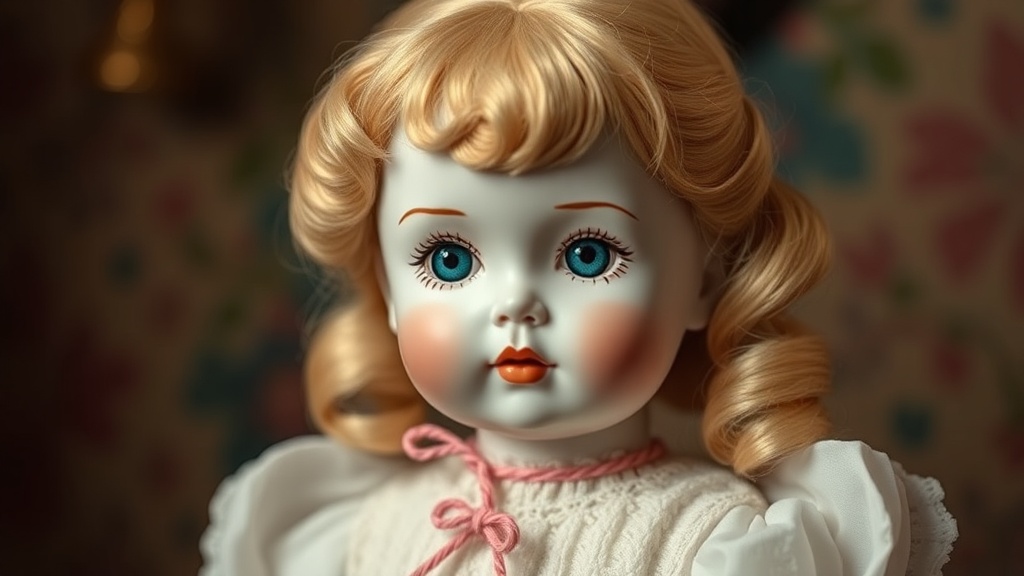
Why Most Collectors Fail to Preserve Their Porcelain Doll's Original Luster

The Hidden Dangers of Improper Display Environments
Did you know that even a slight increase in ambient humidity can cause the delicate paint on a porcelain doll's face to micro-crack within just a few years? While collectors often focus on the purchase, the actual preservation phase is where the real work begins. This post covers the specific environmental factors that degrade high-end porcelain and textile components, ensuring your collection remains in showroom condition for decades.
Most people assume that a simple glass case is enough to protect a doll. However, a glass case can actually become a greenhouse if not managed correctly. If you place a display near a window or a heating vent, you're asking for trouble. The fluctuating temperatures cause the materials to expand and contract—a process that is devastating to aged porcelain glazes and silk clothing. We're looking at how to stabilize these variables to prevent long-term structural damage.
How Do I Protect My Doll's Clothing from Yellowing?
Fabric is often the most vulnerable part of a collectible figure. Unlike the porcelain itself, which is relatively stable, the organic fibers in vintage clothing—like silk, cotton, and lace—are prone to rapid oxidation. When light hits these fibers, it triggers a chemical reaction that leads to that dreaded yellow or brown discoloration. To avoid this, you shouldn't just look at brightness; you must look at the spectrum of light being used.
- Avoid direct UV exposure: Even through a window, UV rays are relentless.
- Use acid-free storage: If you aren't displaying a doll, store its clothing in acid-free tissue paper.
- Check for moisture: Dampness leads to mold, which is nearly impossible to remove from delicate lace.
If you find a doll with slightly yellowed lace, don't reach for a harsh chemical cleaner. Instead, research professional-grade archival methods. The Library of Congress provides excellent resources on how light and temperature affect organic materials, which is a great starting point for anyone dealing with delicate textiles. You want to treat your collection as a living history, not just a shelf of objects.
What Is the Best Way to Dust a Porcelain Figure?
Dusting isn't as simple as grabbing a feather duster and swiping. In fact, a standard feather duster can actually be quite abrasive, snagging tiny threads on a doll's clothing or scratching the delicate surface of the porcelain. When you're cleaning a high-value piece, you need to be much more surgical in your approach. The goal is to remove particulates without adding friction.
I recommend using a very soft, natural-hair brush—specifically one designed for fine art—to gently whisk away dust from the crevices of the lace or the hair. For the porcelain itself, a soft, dry microfibre cloth is your best friend. Never, under any circumstances, use liquid cleaners or even water on a doll unless you are a professional restorer. Moisture is the enemy of both the porcelain glaze and the internal structural components. Even a single drop of water can seep into a seam and cause internal rot or mold growth.
A Checklist for Safe Display
- Distance from Heat: Keep cases at least three feet away from any radiator or vent.
- Light Control: Use LED bulbs, which produce much less heat and UV radiation than incandescent bulbs.
- Airflow: Ensure there is some level of air circulation to prevent stagnant, humid pockets.
It's easy to overlook these details when you're excited about a new find, but the difference between a well-kept collection and a decaying one is entirely in the maintenance. A doll that sits in a poorly ventilated, sun-drenched corner will lose its value almost immediately. You might see the paint dull or the eyes lose their shine, and by then, the damage is often permanent. It's much better to be proactive than to try and reverse the effects of light-induced fading.
When you're sourcing information on material aging, the American Art Museum often has-exhibits and articles regarding the preservation of delicate artifacts. While they focus on a broader range of art, the principles of light, humidity, and temperature control remain the same for any high-end collectible. Your porcelain dolls deserve that level of respect. If you treat them like museum pieces, they'll stay that way.