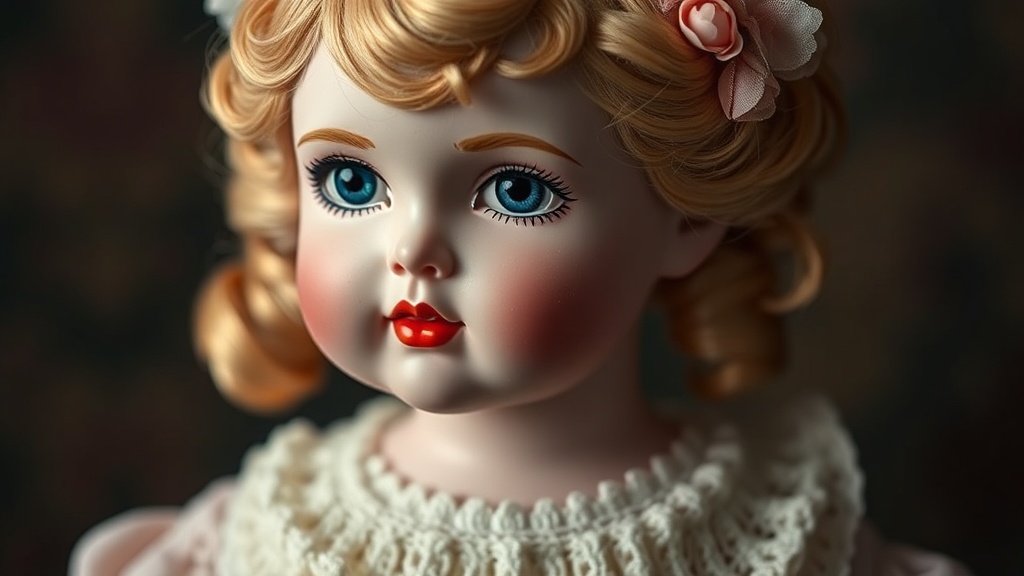
Tracing the Evolution of Victorian Porcelain Dolls

A single, hand-painted porcelain hand rests against a silk-lined velvet box. The surface is cool, almost glass-like, with a slight translucency that suggests a life lived under candlelight. This is the hallmark of a true Victorian era piece—a period where the transition from simple playthings to high-art collectibles changed the toy industry forever. We're looking at the shift from heavy, wooden dolls to the delicate, bisque-headed marvels that defined an era of craftsmanship. Understanding this evolution helps collectors distinguish between a mass-produced novelty and a genuine antique piece of history.
The Victorian era wasn't a single, monolithic block of time, but rather a massive leap in how materials were used to mimic human features. Before the mid-19th century, most dolls were made of wood, wax, or even leather. Then, the introduction of porcelain—and later, bisque—changed the game. It allowed for a level of realism that felt almost uncanny to the people of the time. We aren't just talking about toys; we're talking about the birth of the modern doll collector market.
What is the difference between Porcelain and Bisque dolls?
Bisque is a type of unglazed porcelain that has a matte, skin-like finish, whereas standard porcelain is often glazed and shiny.
If you've ever held a doll and noticed it doesn't have that blinding, reflective glare, you're likely holding a bisque doll. This is a distinction that matters deeply for collectors. Traditional porcelain is often highly reflective and can look a bit "plastic-y" or artificial under bright lights. Bisque, however, was developed to mimic the soft, matte texture of human skin. It was a breakthrough in the mid-1800s that allowed makers to create much more expressive, lifelike faces.
The texture of bisque is what gives these dolls their "soul." When you look at a high-quality bisque porcelain head, the light hits it differently than it would a standard ceramic plate. It absorbs light rather than bouncing it back. This creates a soft-focus effect on the facial features, making the eyes look deeper and the expression more subtle. It’s a subtle detail, but it's one that seasoned collectors use to verify authenticity and quality.
That said, don't be fooled by modern reproductions. Many modern "porcelain" dolls are actually made of a high-gloss glazed ceramic that lacks the depth of true Victorian bisque. If the head looks too shiny or reflective, it probably isn't an authentic antique. (I've seen plenty of "vintage-style" dolls at craft fairs that are actually just glazed ceramic—they don't hold a candle to the real thing.)
The Evolution of Materials: A Quick Comparison
| Material Type | Texture/Finish | Common Era | Collector Value |
|---|---|---|---|
| China (Glazed) | Shiny, reflective, smooth | Early-to-mid 1800s | Moderate |
| Bisque (Unglazed) | Matte, skin-like, soft | Late Victorian (1870-1900) | High |
| Composition | Wood pulp/glue, matte | Early 1900s (Transition) | Variable |
How much do Victorian porcelain dolls cost?
The price of a Victorian doll varies wildly based on the maker's mark, the condition of the bisque, and the rarity of the outfit.
There is no single answer here because the market is so fragmented. A common, unmarked porcelain doll might only fetch $20 to $50 at an estate sale. However, a signed piece from a prestigious maker like Jumeau or Bru can reach thousands of dollars at auction. You're paying for the brand, the artistry, and the historical significance. If the face is even slightly chipped or the eyes are misaligned, the value drops significantly.
One thing to watch out for is the "condition" trap. A doll might look beautiful from a distance, but a single hairline crack in the bisque can slash the value by 70%. This is why I always recommend learning about identifying marks and signatures before you ever pull out your wallet. Without knowing if that mark is a legitimate manufacturer's stamp or a later-added reproduction, you're essentially guessing.
Here's a breakdown of what drives the price up:
- Maker Marks: Signed heads or branded bodies.
- Eyes: Glass eyes are much more valuable than painted ones.
- Clothing: Original Victorian-era silk or lace outfits are incredibly rare.
- Condition: No cracks, no "crazing" (fine lines in the glaze), and intact limbs.
Why did manufacturers switch from China to Bisque?
Manufacturers switched to bisque because it allowed for a more realistic, human-like appearance that glazed china could not achieve.
In the early 19th century, "China dolls" were the standard. These had a high-gloss glaze that made them look very bright and often quite stark. While they were popular, they lacked the nuance of a human face. As the Victorian era progressed, the demand for "realistic" toys grew. People wanted dolls that looked like children, not like shiny ceramic objects. Bisque provided that matte, soft-looking surface that made the doll's expression feel more "alive."
This shift also coincided with advancements in the French and German toy industries. French makers, in particular, became obsessed with the aesthetic of the "fashion doll." They weren't just making toys; they were making miniature sculptures. This era saw the rise of the "Bébé" doll, which was designed to look like a child rather than an adult woman. This was a massive cultural shift in how dolls were viewed—moving from a fashion accessory to a childhood companion.
The craftsmanship required for these bisque heads was immense. The firing process had to be perfect to ensure the head didn't crack, and the painting of the eyelashes and lips required a steady, incredibly skilled hand. This is why the transition was so important—it moved the industry from mass-production toward high-end artistry. It's also why these pieces are so much more delicate to handle today.
If you are looking to acquire these pieces, you must be careful with how you handle them. A single drop can ruin a century of history. I've written a detailed guide on how to properly clean and store your dolls, and I can't stress enough how important it is to follow those steps. You can't just wipe a Victorian bisque head with a damp cloth and hope for the best.
The evolution of the Victorian doll is a story of material science meeting art. We went from the shiny, hard surfaces of early China dolls to the soft, expressive, and highly collectible world of bisque. Whether you're a collector looking for your first piece or a seasoned veteran, knowing these distinctions—the texture, the maker, and the material—is the only way to truly appreciate the history sitting on your shelf.
The market for these pieces is still very much alive, but it requires a discerning eye. Don't just buy a doll because it looks "old." Look for the texture. Look for the marks. Understand the difference between a glazed-ceramic novelty and a true bisque masterpiece. That's where the real history lies.